Website Strategy
The Hidden Cost of an Outdated Website
An outdated website doesn't just look old—it quietly costs your business trust, leads, revenue, and growth opportunities every single day. Here's why investing in a modern website pays for itself.
OmniLayer · Jul 18, 2026 · 7 min read
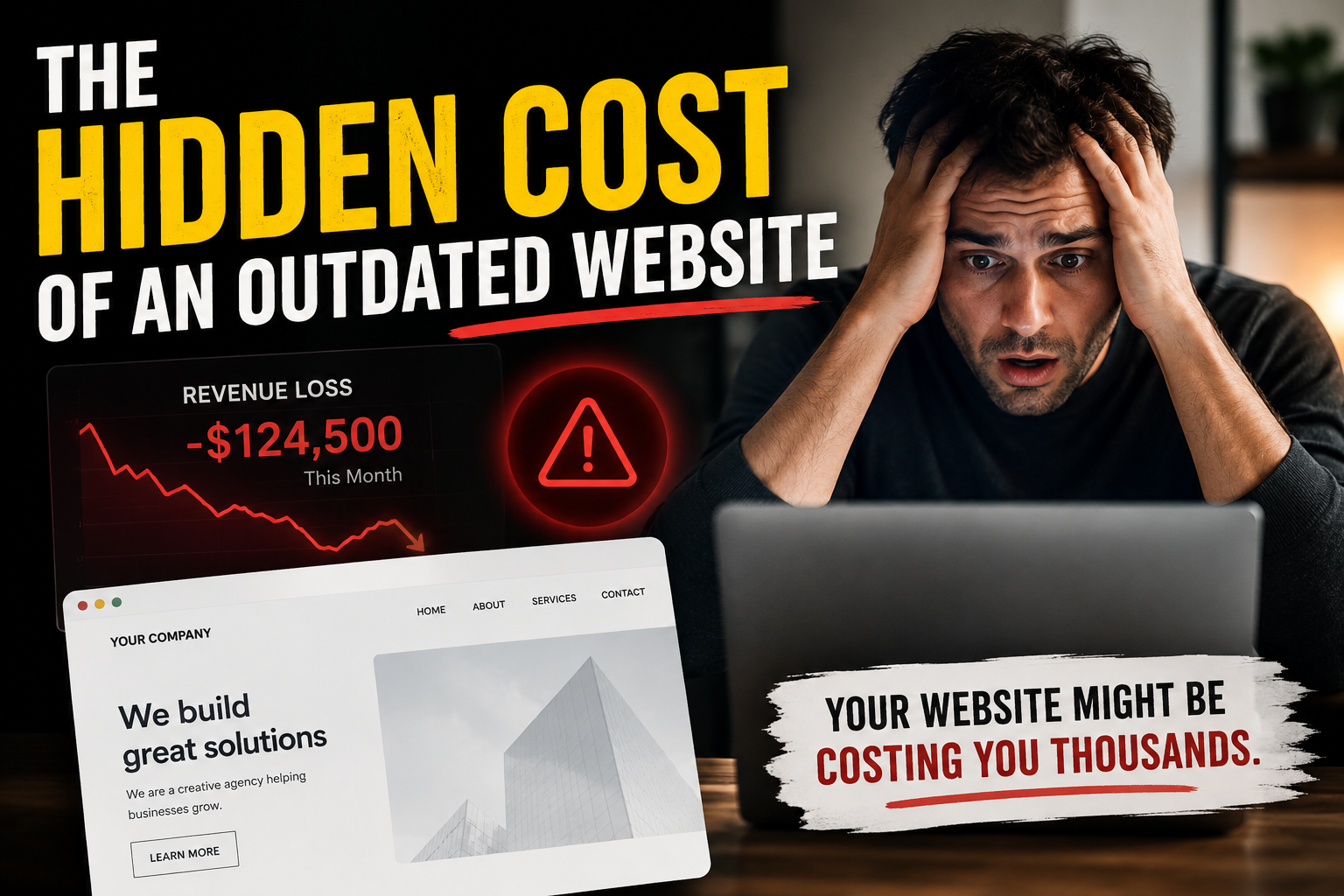
Your website might be costing you far more than you realize.
Many business owners assume that as long as their website is online, it's doing its job.
It has information about the company.
It showcases products or services.
It includes a contact form.
So everything should be fine—right?
Not necessarily.
An outdated website doesn't just look old.
It quietly costs you customers, revenue, and opportunities every single day.
Unlike obvious business expenses, these losses rarely appear on a balance sheet.
They happen silently through lower trust, fewer conversions, and visitors who leave before taking action.
Let's explore the hidden costs of an outdated website—and why investing in a modern one is often one of the highest-return decisions a business can make.
First Impressions Are Made in Seconds
Before someone speaks with your sales team or experiences your product, they experience your website.
Research consistently shows that visitors form an opinion within seconds of arriving.
If your site feels outdated—with old design trends, cluttered layouts, inconsistent branding, or poor visuals—people naturally begin questioning your credibility.
They may wonder:
- Is this company still active?
- Can I trust them?
- Are they professional enough?
- Will their service be outdated too?
Whether those assumptions are fair doesn't matter.
People make emotional decisions before they justify them logically.
A modern, professional website builds confidence immediately.
An outdated one creates doubt.
The Hidden Costs of an Outdated Website
You're Losing Customers Before They Contact You
Most visitors won't tell you why they left.
They simply leave.
If your website loads slowly, is difficult to navigate, contains confusing messaging, or doesn't clearly explain what you offer, visitors won't spend time trying to figure it out.
They'll move on to a competitor whose website answers their questions faster.
Every visitor who leaves without contacting you represents revenue you may never even realize you lost.
Many businesses assume they have a traffic problem.
In reality, they often have a conversion problem.
Poor Mobile Experience Drives People Away
Today, a large percentage of website traffic comes from mobile devices.
Yet many older websites were designed primarily for desktop screens.
Common issues include:
- Tiny text that's difficult to read
- Buttons that are hard to tap
- Broken layouts
- Slow loading pages
- Horizontal scrolling
If your website feels frustrating on a phone, visitors won't struggle through it.
They'll leave.
A responsive website is no longer a luxury.
It's the minimum expectation.
Slow Websites Lose Both Visitors and Rankings
Speed affects everything.
Modern users expect websites to load almost instantly.
Even a delay of a few seconds can increase bounce rates and reduce conversions.
Slow websites also struggle in search rankings.
Search engines prioritize websites that deliver better user experiences—including faster loading speeds.
That means an outdated website can reduce both:
- The traffic you receive
- The percentage of visitors who become customers
Weak Messaging Means Missed Sales
Many older websites focus more on the company than the customer.
They talk about:
- Years of experience
- Company history
- Internal processes
- Technical jargon
But visitors are asking very different questions:
- Can you solve my problem?
- Why should I choose you?
- What makes you different?
- What happens if I contact you?
If your messaging doesn't answer those questions quickly, visitors lose interest.
Clear messaging turns curiosity into confidence.
Weak messaging turns potential customers into missed opportunities.
Your Competitors Keep Moving Forward
Your website doesn't exist in isolation.
Customers compare businesses every day.
If your competitors invest in better websites—with clearer messaging, faster performance, and stronger branding—they immediately appear more trustworthy.
Even if your service is objectively better, perception often influences purchasing decisions.
An outdated website can make competitors appear stronger than they actually are.
Outdated Websites Are Harder to Maintain
Older websites often rely on outdated technology, plugins, or code that becomes increasingly difficult to maintain.
This can lead to:
- Security vulnerabilities
- Compatibility issues
- Broken functionality
- Higher maintenance costs
- Difficulty adding new features
Instead of helping your business grow, your website becomes a constant source of technical problems.
A modern website creates a stronger foundation for future growth.
You're Missing Valuable Business Insights
Modern websites do much more than display information.
They help businesses understand customer behavior.
With proper analytics, you can discover:
- Where visitors come from
- Which pages perform best
- Where users leave
- Which marketing channels generate leads
- Which calls-to-action convert the most
Without these insights, you're making decisions based on assumptions instead of data.
Your website should be one of your most valuable business intelligence tools—not just a digital brochure.
Your Website Should Work Like Your Best Salesperson
Imagine hiring a salesperson who:
- Arrives late every day
- Gives confusing explanations
- Ignores customer questions
- Looks unprofessional
- Rarely asks for the sale
You wouldn't keep them for very long.
Yet many businesses unknowingly expect outdated websites to generate leads despite having these exact shortcomings.
A high-performing website works around the clock.
It:
- Builds trust
- Educates visitors
- Answers objections
- Showcases proof
- Encourages people to take the next step
Even while you're asleep.
That's the standard your website should meet.
A Website Isn't an Expense—It's an Investment
Many businesses hesitate to redesign their website because they see it as another expense.
A better question is:
How much is your current website costing you every month?
If you're losing qualified leads, ranking lower in search results, damaging trust, or failing to convert visitors into customers, the cost of doing nothing may be far greater than the cost of improving your website.
A modern website isn't just about looking better.
It's about creating a better experience, communicating your value clearly, and helping your business grow consistently.
Final Thoughts
Your website is often the first interaction people have with your business.
And first impressions matter.
An outdated website can quietly hurt your brand, reduce customer trust, lower search visibility, and send potential clients to your competitors.
These losses are difficult to measure.
But they compound over time.
The good news is that a modern website doesn't just solve these problems.
It becomes one of your strongest business assets.
When your website loads quickly, communicates clearly, builds credibility, and guides visitors toward action, it stops being just an online presence.
It becomes one of your most powerful growth engines.
The hidden cost of an outdated website isn't simply that it looks old.
It's the opportunities you'll never know you lost.
Is your website helping your business grow—or holding it back?
At OmniLayer, we build high-converting websites that combine modern design, strategic messaging, and exceptional performance to turn visitors into customers.
Let's build a website that works as hard as you do.
Stay in the loop
Get our best content in your inbox
No spam, just insights on conversion, design, and SaaS growth.
Keep reading