Conversion Optimization
How to Turn Your Website into a 24/7 Salesperson
Your website shouldn't just look good—it should sell. Learn how to build a website that educates prospects, builds trust, and generates leads around the clock.
OmniLayer · Jul 16, 2026 · 6 min read
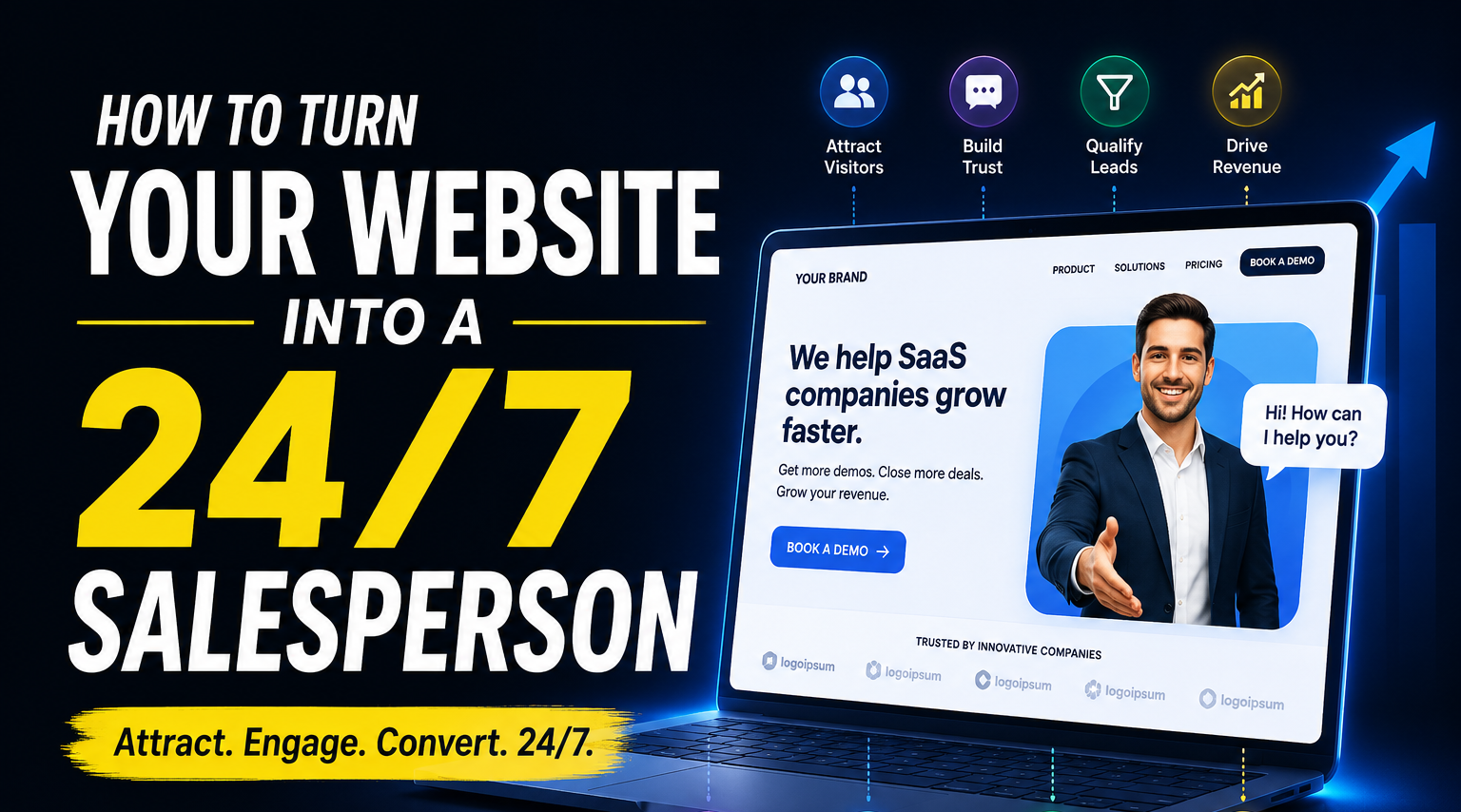
Most websites simply exist.
Great websites sell.
Imagine hiring your best salesperson.
They work 24 hours a day.
They never call in sick.
They answer every prospect's questions.
They build trust.
They qualify leads.
They encourage people to take action.
Now imagine they never ask for a salary.
That's exactly what your website should be.
Yet many startup websites do the opposite.
They look modern, feature beautiful animations, and showcase impressive technology—but they fail at the one thing that matters:
Generating business.
A website isn't just a digital brochure.
It's your company's first sales conversation.
The real question is:
Is your website helping your sales team—or making their job harder?
What Does a Salesperson Actually Do?
Before improving your website, think about what a great salesperson actually does.
They:
- Explain the product clearly
- Understand customer problems
- Build trust
- Handle objections
- Differentiate from competitors
- Guide prospects toward the next step
- Close the deal
Now ask yourself:
Does your website do the same?
If not, you're losing potential customers before your sales team even gets involved.
Your Homepage Is Your First Sales Call
Research consistently shows that visitors form an opinion within seconds of landing on a website.
During those first moments, they're looking for answers to four simple questions:
- What do you do?
- Is this for me?
- Why should I trust you?
- What should I do next?
If your homepage can't answer those questions quickly, visitors leave.
Not because your product isn't valuable.
Because they don't understand it.
9 Ways to Turn Your Website into a Salesperson
1. Lead with Clarity, Not Cleverness
Many startup homepages begin with headlines like:
"The Future of Intelligent Automation."
It sounds impressive.
But it doesn't actually explain anything.
Instead, your headline should immediately communicate:
- What you do
- Who it's for
- The outcome you help achieve
Visitors shouldn't have to decode your message.
Clear messaging consistently outperforms clever messaging.
2. Sell Outcomes, Not Features
Customers don't buy features.
They buy better outcomes.
Instead of saying:
❌ AI-powered workflow automation
Say:
✅ Automate repetitive work so your team can focus on high-value tasks.
Your website should constantly answer one question:
"How will this improve my business?"
3. Build Trust Before Asking for Action
People rarely buy from companies they don't trust.
That's why high-performing websites include trust signals such as:
- Customer testimonials
- Client logos
- Case studies
- Success metrics
- Awards
- Security certifications
- Media mentions
Trust reduces uncertainty.
And uncertainty kills conversions.
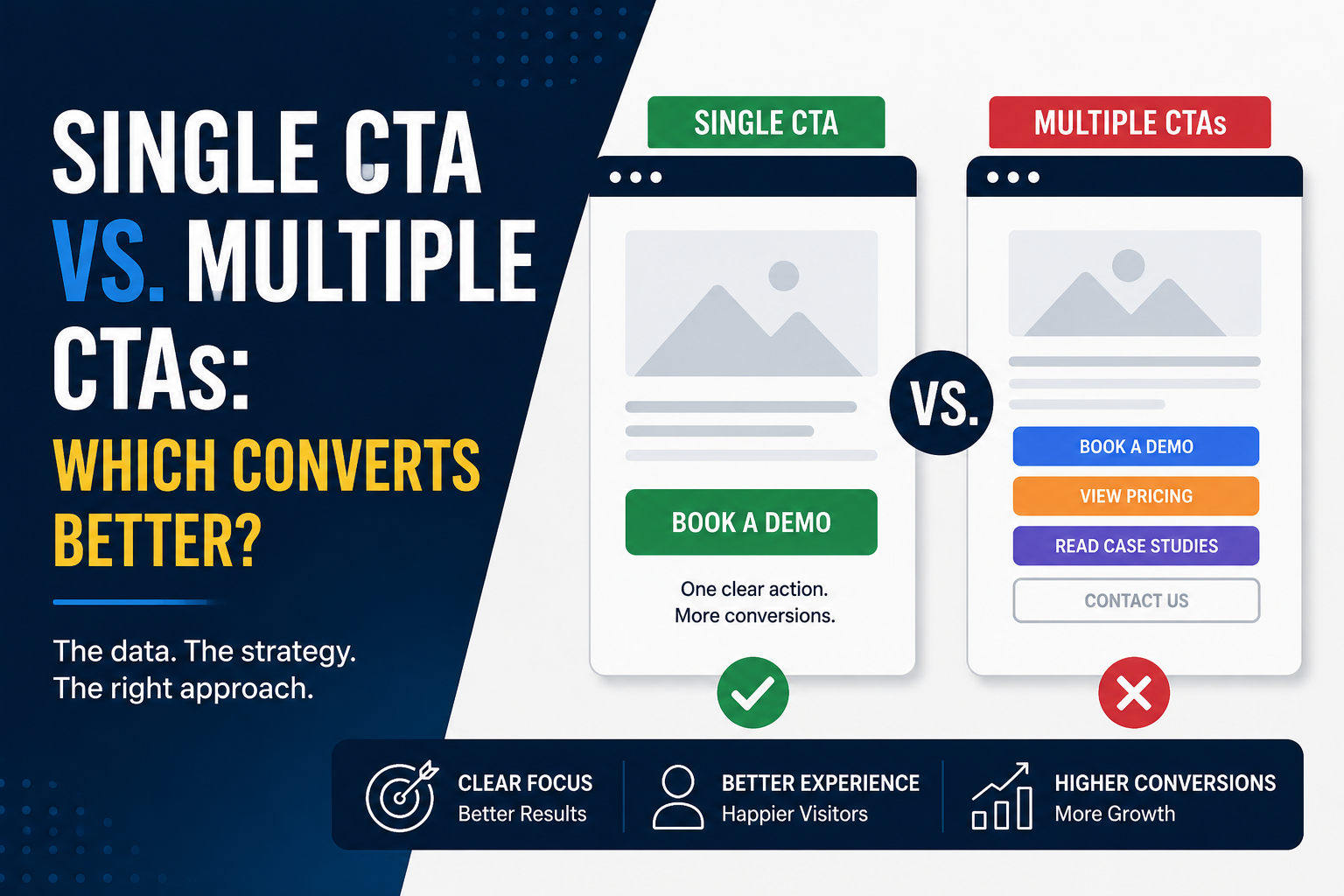
4. Give Visitors One Clear Next Step
Many websites overwhelm visitors with options:
- Book a Demo
- Contact Sales
- Watch Video
- Learn More
- Start Free Trial
- Download Guide
Too many choices create friction.
Instead, guide visitors toward one primary action.
For most B2B SaaS companies, that's:
- Book a Demo
or
- Start Free Trial
The easier the decision, the more likely visitors are to take it.
5. Handle Objections Before They Ask
Great salespeople anticipate questions.
Your website should do the same.
Think about the concerns prospects commonly have:
- Is this secure?
- Will it integrate with our existing tools?
- Is it expensive?
- How long does implementation take?
- Do companies like ours use it?
Answer those questions before prospects ask.
The fewer unanswered questions, the more likely visitors are to convert.
6. Simplify the Buying Journey
A complicated website creates unnecessary friction.
Visitors shouldn't have to hunt for information.
Structure your pages logically:
- Hero section
- Benefits
- How it works
- Social proof
- Features
- FAQs
- Final CTA
Guide visitors naturally from curiosity to confidence.
7. Speak Your Customer's Language
Many startups write from their own perspective.
For example:
"Our platform leverages advanced AI."
Your customers care about results—not internal terminology.
Instead, focus your messaging on:
- Problems
- Goals
- Outcomes
- Business impact
The simpler your language, the easier it is for customers to understand your value.
8. Make Every Page Work Toward Conversion
Every page on your website should answer one question:
What should the visitor do next?
Whether it's a blog post, pricing page, or product page, always provide a logical next step.
Without guidance, visitors leave.
9. Continuously Improve
The best salespeople improve after every conversation.
Your website should too.
Regularly review:
- Conversion rates
- Bounce rates
- Scroll depth
- Heatmaps
- User recordings
- Customer feedback
Small, consistent improvements often outperform complete redesigns every few years.
Common Mistakes That Stop Websites From Selling
Avoid these common pitfalls:
- Generic headlines
- Feature-heavy messaging
- Weak CTAs
- Too much information
- No testimonials
- Poor mobile experience
- Slow loading speed
- Confusing navigation
- Inconsistent branding
- No clear value proposition
Fixing just a few of these issues can significantly improve your website's performance.
Your Website Should Support Sales—Not Replace It
A website won't close every deal.
That's not its purpose.
Its job is to:
- Educate prospects
- Build trust
- Qualify visitors
- Reduce objections
- Encourage conversations
By the time someone books a demo, they should already understand your product and believe it's worth exploring.
That makes every sales conversation shorter, smoother, and more productive.
Final Thoughts
Your website is one of the few business assets that works around the clock.
Every visitor who lands on it is having a conversation with your brand.
The question is:
What is your website saying?
If it's confusing, generic, or difficult to navigate, you're losing opportunities every single day.
But when your messaging is clear, your positioning is strong, and your customer journey is intentional, your website becomes far more than a collection of pages.
It becomes a 24/7 salesperson—one that attracts, educates, and converts visitors into customers, even while you sleep.
At OmniLayer, we help SaaS, AI, and FinTech startups build websites that do far more than look great.
By combining strategy, positioning, messaging, UX, design, and development, we create digital experiences that build trust, generate qualified leads, and support long-term business growth.
If you're wondering whether your website is helping—or hurting—your sales, start with a professional website audit to uncover your biggest opportunities for growth.
Stay in the loop
Get our best content in your inbox
No spam, just insights on conversion, design, and SaaS growth.
.png)