Conversion Optimization
What Is Conversion Rate Optimization (CRO)? The Beginner's Guide for SaaS & Startup Founders
Getting more traffic isn't always the answer. Learn what Conversion Rate Optimization (CRO) is, why it matters, and how to turn more website visitors into customers without increasing your marketing spend.
OmniLayer · Jul 15, 2026 · 7 min read
.png)
Your website gets visitors.
But are those visitors becoming customers?
For many startups, the answer is no.
Founders often assume they have a traffic problem. They invest more in SEO, Google Ads, LinkedIn Ads, or social media marketing, hoping that more traffic will solve the issue.
In reality, the problem is often much simpler.
Your website isn't converting enough of the visitors you already have.
That's where Conversion Rate Optimization (CRO) comes in.
In this guide, you'll learn what CRO is, why it matters, and how startups can generate more leads and customers—without increasing traffic.
What Is Conversion Rate Optimization?
Conversion Rate Optimization (CRO) is the process of increasing the percentage of website visitors who complete a desired action.
That action could be:
- Booking a demo
- Starting a free trial
- Requesting a consultation
- Filling out a contact form
- Purchasing a product
- Subscribing to a newsletter
Instead of focusing on getting more visitors, CRO focuses on helping more of your existing visitors take action.
What Is a Conversion?
A conversion is simply a visitor completing your desired goal.
For example:
- SaaS company: Demo booked
- AI startup: Free trial started
- FinTech company: Account created
- B2B agency: Contact form submitted
- eCommerce store: Product purchased
Every business measures conversions differently, but the principle remains the same.
What Is Conversion Rate?
Conversion rate measures how many visitors complete your desired action.
The formula is:
Conversion Rate = (Conversions ÷ Visitors) × 100
For example:
- 5,000 monthly visitors
- 100 demo bookings
Your conversion rate is 2%.
If you improve that rate to 3%, you now generate:
- 150 demo bookings
That's 50% more leads without spending another dollar on marketing.
Why CRO Matters More Than Traffic
Imagine two SaaS companies.
Company A
- 100,000 visitors
- 1% conversion rate
- 1,000 conversions
Company B
- 50,000 visitors
- 3% conversion rate
- 1,500 conversions
Despite having half the traffic, Company B generates more customers.
That's why improving conversions often delivers a much higher return on investment than simply increasing website traffic.
Common Reasons Websites Don't Convert
Many startup websites struggle because they confuse visitors instead of guiding them.
Here are the most common reasons.
Unclear Value Proposition
Visitors should immediately understand:
- What you do
- Who it's for
- Why you're different
If your homepage can't answer those questions within a few seconds, visitors leave.
Weak Headlines
Many startups rely on headlines like:
"The Future of Intelligent Automation."
It sounds impressive.
But what does it actually mean?
Clear messaging always beats clever messaging.
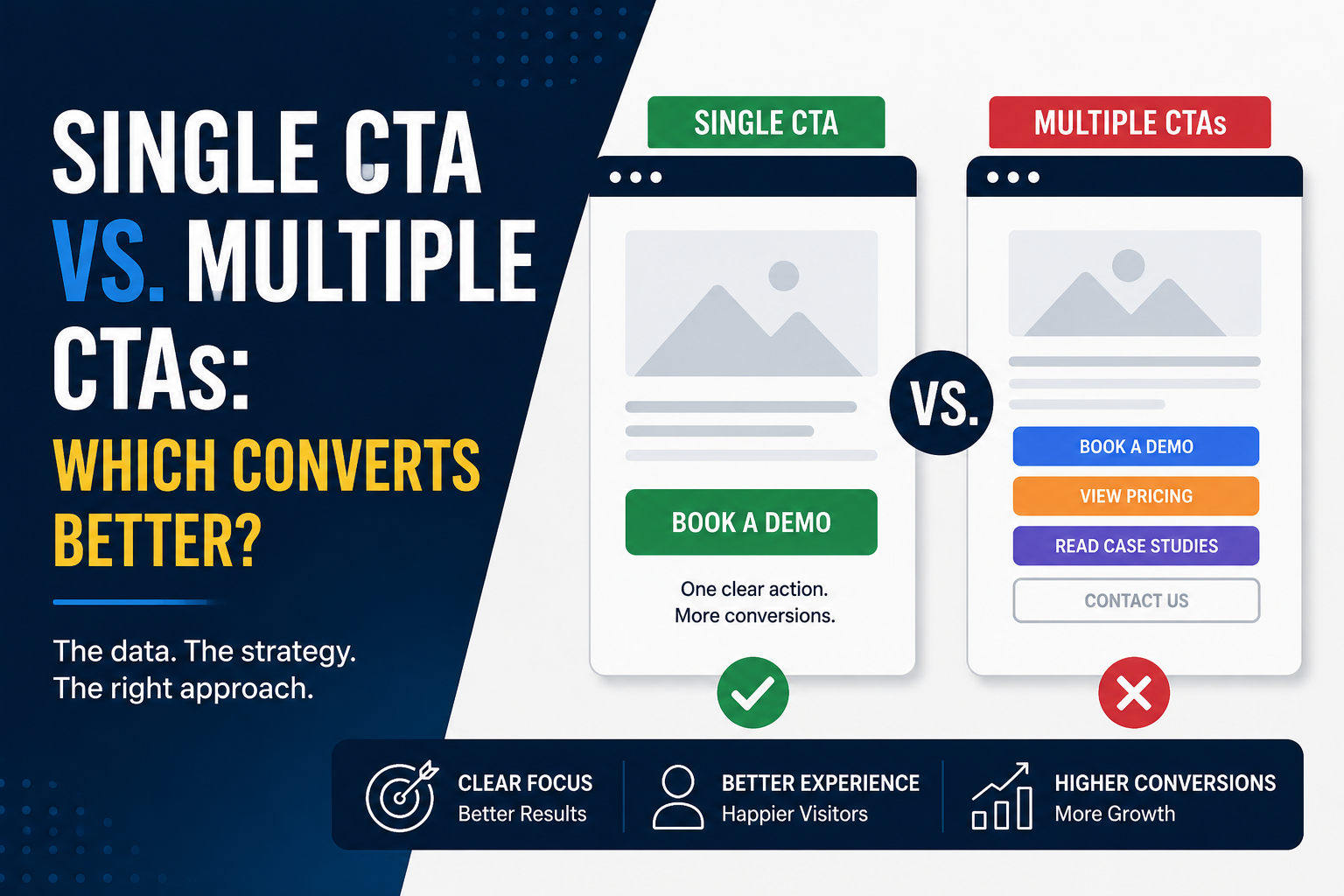
Poor Call-to-Action (CTA)
If visitors don't know what to do next, they won't take action.
Strong CTAs include:
- Book a Demo
- Start Free Trial
- Schedule a Consultation
- Get Started
Every page should guide users toward one clear next step.
Lack of Trust
Visitors hesitate when they don't see evidence that your company is credible.
Strong trust signals include:
- Customer testimonials
- Client logos
- Case studies
- Reviews
- Security badges
- Awards
- Product statistics
Trust reduces perceived risk.
Too Much Complexity
Many startups try to explain everything.
The result?
Information overload.
Visitors don't need every feature immediately.
They simply need enough clarity to decide whether your product is worth exploring further.
The Core Principles of CRO
Successful websites consistently share a few important characteristics.
1. Clarity
Visitors should instantly understand:
- What you do
- Why it matters
- What they should do next
Confused visitors rarely convert.
2. Trust
People buy from companies they trust.
Reduce uncertainty by showcasing:
- Testimonials
- Customer logos
- Reviews
- Case studies
- Clear company information
3. Simplicity
Every additional decision creates friction.
Reduce unnecessary:
- Text
- Buttons
- Navigation items
- Forms
- Visual clutter
Simple experiences convert better.
4. Relevance
Your messaging should speak directly to your target audience.
Don't try to appeal to everyone.
Specific messaging attracts the right customers.
5. Continuous Improvement
CRO isn't a one-time project.
The best companies continually test:
- Headlines
- CTAs
- Layouts
- Pricing pages
- Images
- Navigation
- Forms
Small improvements compound over time.
CRO Best Practices for Startup Websites
If you're just getting started, focus on these improvements first.
Write a Clear Homepage Headline
Visitors should immediately understand what your product does.
Use One Primary CTA
Avoid overwhelming users with too many choices.
Add Social Proof
Display customer logos, testimonials, reviews, or success stories.
Simplify Navigation
Reduce distractions and make important pages easy to find.
Focus on Benefits Instead of Features
Instead of explaining technology, explain outcomes.
For example:
❌ Feature
AI-powered workflow orchestration
✅ Benefit
Automate repetitive work so your team can focus on higher-value tasks.
Improve Page Speed
Slow websites lose visitors before they even engage.
Make Your Website Mobile-Friendly
Many decision-makers first discover products on their phones.
A poor mobile experience directly impacts conversions.
CRO Is About Business Growth
Many founders think CRO is simply about changing button colors or rearranging page sections.
That's a misconception.
Real CRO focuses on understanding:
- User behavior
- Customer psychology
- Messaging
- Decision-making
- Trust
- Business goals
Ultimately, CRO is about helping more visitors become customers.
Final Thoughts
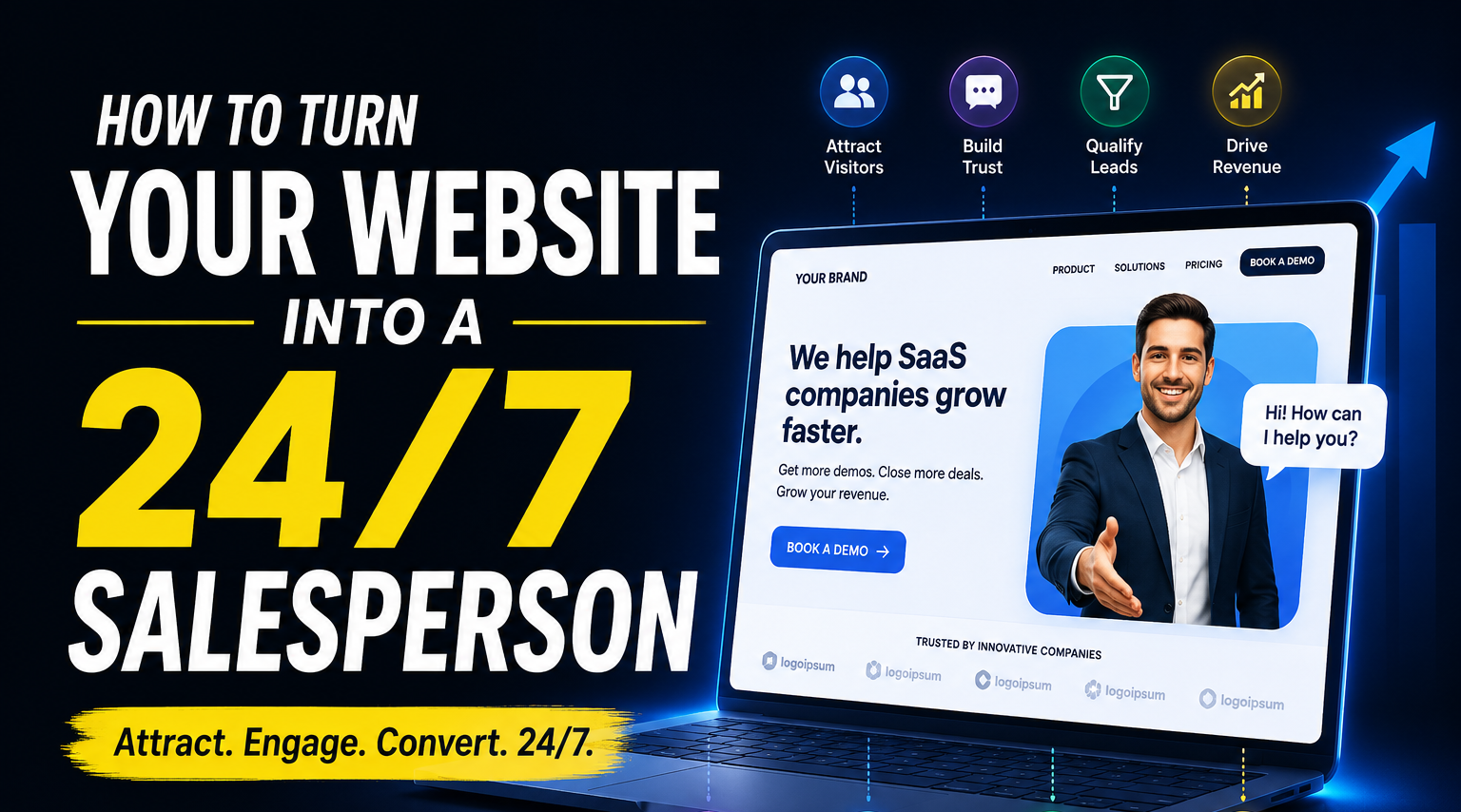
Your website is often your company's first sales conversation.
Every visitor asks four questions:
- What do you do?
- Is this for me?
- Why should I trust you?
- What should I do next?
If your website answers those questions clearly, conversions improve.
If it doesn't, more traffic won't solve the problem.
Before spending more money attracting visitors, make sure your website is ready to convert the ones you already have.
At OmniLayer, we help SaaS, AI, and FinTech companies build websites that don't just look modern—they communicate clearly, build trust, and support business growth.
If you'd like a professional website audit, we'd be happy to help identify the biggest opportunities to improve your site's clarity and conversions.
Stay in the loop
Get our best content in your inbox
No spam, just insights on conversion, design, and SaaS growth.